
I have been working with technical specifications for the design of transformers for renewable energy applications (wind and solar) with maximum ambient temperatures above 40°C, reaching values close to 55°C!
These ambient temperature values are higher than the maximums commonly available for the design of transformers in the Brazilian electrical system.
This happens because renewable energy parks are generally built in regions of Brazil that experience the highest solar incidence and, consequently, have a higher ambient temperature. This condition, primarily desired for the installation of solar parks, can increase the thermal demands on transformers, especially those of the unit transformers in these applications.
It often happens that, in these applications, the unit transformer transformers are installed in enclosed cubicles near the base of the wind turbines or located in enclosed cabins near (or even adjacent to) the inverters in the case of solar energy (currently, skid-type substations are being used).
The thermal behavior of transformers operating in enclosed environments must be analyzed very carefully.
Transformers, when operating in enclosed spaces, have significantly impaired thermal behavior because their heat dissipation capacity is practically limited to the passive air circulation of these structures. Active cooling systems are rarely installed, and therefore, the internal ambient temperature of these closed environments can reach maximum values much higher than the external ambient temperature, damaging and shortening the transformer’s lifespan.
According to the IEC60076-7 standard’s calculation of service life loss, an increase in average temperature of just 10 °C can reduce the equipment’s lifespan by several years (to calculate the exact value, some additional information from the equipment’s design is necessary).
The ambient temperature that should be considered for the design of transformers operating in enclosed spaces is the temperature of the air surrounding the transformer inside the cubicle, and not the external environment.
Therefore, we have listed the main issues that can help to technically clarify some topics related to the ambient temperature of this equipment operating in enclosed environments and, thus, serve as a basis for the construction and/or modification of the text of the technical specifications of these applications:
What is the average and maximum ambient temperature at the transformer installation site?Will the transformer operate in a closed enclosure with limited heat dissipation?Does the ambient temperature considered take into account the condition of the transformer operating within an enclosed environment?Did the determination of the transformer's ambient temperature (which may be within an enclosed environment) consider the heating generated by the losses of the equipment itself and its accessories?Was the complete thermal behavior of the closed transformer system analyzed, considering the total level of losses that must be dissipated from the closed enclosure to the external environment?
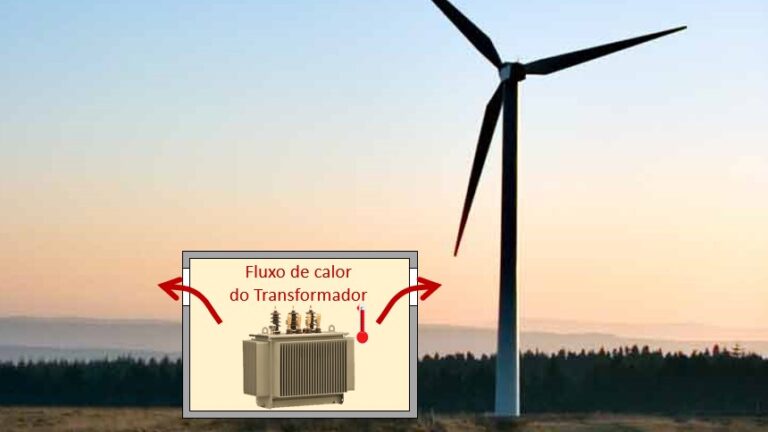
In the case of enclosed environments, although transformers are designed with excellent efficiency when compared to other electrical equipment, the high power levels involved and the intrinsic losses cause an increase in the internal temperature of this enclosure relative to the external ambient temperature.
Citing as a reference: in transformers for unit drives with a power of 5 MVA and considering an efficiency of approximately 99%, losses in the range of 50 kW are generated that must be dissipated from this closed cubicle to the external environment.
Here are some questions that can be asked regarding the design of the installation cubicles for these transformers:
- Is the cooling (or air circulation) system designed to dissipate transformer losses under nominal operating conditions?
- Is the cooling (or air circulation) system designed to also account for losses from fixtures and electrical panels that may be installed in the same area?
Furthermore, it should be noted that in the case of transformers used in locations with high levels of pollution (typical of coastal areas or areas with high ventilation and dust accumulation), particulate matter may accumulate on the equipment and its cooling system, further compromising its thermal performance. In this case, the following issues may be observed:
- Is there a maintenance program that checks the cleanliness of the transformers and their cooling elements (radiators)?
- Is there protection against particulate ingress at the air intake openings of the closed cubicles? Is this protection limiting airflow? Was this condition considered in the thermal calculations?
- Is the air intake for internal cooling in these cubicles unobstructed?
- If there is an active cooling system (fans or air conditioning), does it have adequate backup or fault protection and signaling systems?
It is known that the lifespan of transformers fundamentally depends on their operating temperature, which in turn depends directly on the ambient temperature to which the equipment is exposed.
There are many points to consider to ensure that a transformer does not overheat in renewable energy applications, especially when located inside an enclosed cubicle.
Many solutions can be proposed for this application, ranging from a complete thermal design that considers the behavior of the transformer in conjunction with the enclosed cubicle to temperature monitoring systems using sensors.
Designing a transformer considering the actual ambient temperature of its installation will ensure that its lifespan is preserved throughout operation and, consequently, reduce shutdowns (meaning generation stoppage) for maintenance tasks.
The use of temperature sensors, in turn, is a relatively simple solution, and the data generated, when cross-referenced with the power passing through the transformer, can generate very important information to determine if any critical condition is developing and, therefore, for example, trigger corrective maintenance teams or adjust the frequency of preventive maintenance.