
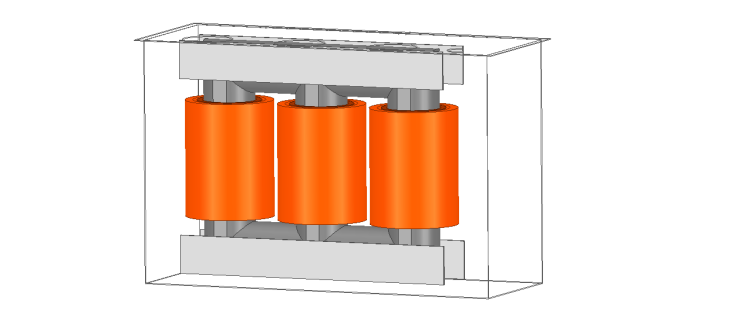
It may seem easy to build a low-voltage transformer; after all, many design parameters are simplified when the equipment voltage does not exceed, for example, the typical voltage level of energy sub-transmission systems up to 138kV. However, when there are high-power transformers operating at low voltage levels, what becomes more challenging and must be analyzed in detail in the design are the effects of the amplitude of the stray magnetic field generated by the respective current.
The application of high-power transformers at voltage levels in the tens of kilovolts range can be found, for example, in renewable energy systems, medium-voltage transmission systems, and transformers that power electric smelting furnaces and power rectifiers. It is not uncommon to find applications of this nature operating at voltages from 13.2 to 34.5 kV.
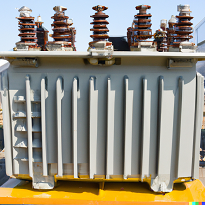
We can define the process of designing a transformer as a constant challenge in the search for the optimal point for the relationship between the design safety margin and the amount of raw material used in manufacturing.
In this sense, when defining the safety distances of the active part, all the characteristics of the transformer are considered, but the most decisive factor at this stage ends up being the level of dielectric stresses specified for testing and operation. Based on this voltage value, the insulation distances of the equipment are determined, such as the distance between the ends of the windings and the active part hardware, and the active part itself in relation to the transformer tank.
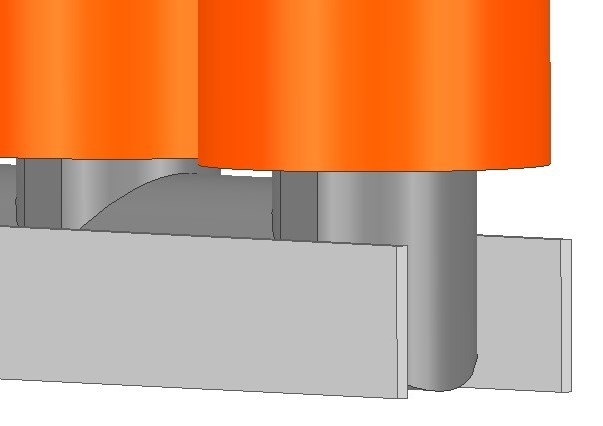
And it is at this stage of the project that the difficulty arises: the distance required to control the amplitude of the electric field (electrical isolation) may not be sufficient to avoid the effects of the magnetic field (parasitic losses and consequent heating) generated by the current circulating in the windings or connecting elements themselves.
For example: a 36kV class transformer with a power rating of 30MVA.
At this voltage level, the minimum design insulation distance ends up being exceeded by the distance required to meet the mechanical assembly requirements; that is, they are quite reduced and can have values close to 50mm and still maintain the dielectric safety margin.
Therefore, with these conditions established, it is very important to verify the behavior of parasitic losses generated in the metallic fastening elements of the active part and in the equipment’s tank itself. This verification can be done analytically or using numerical tools. There is no doubt that using the second option, in this case numerical simulation based on finite elements, a higher level of accuracy is achieved in the analysis and it is possible to obtain a more optimized design.
It is important to mention that this condition can be even more critical when the project has a higher impedance, for example, levels above 10%. Therefore, since the amplitude of the stray magnetic field depends directly on the power level of the transformer and its construction characteristics (which also determine the impedance), a power equipment, even operating at a very low voltage level, requires effective control of the points of generation of parasitic losses and, consequently, heating, mainly in relation to the metallic elements of the active part and the tank itself.
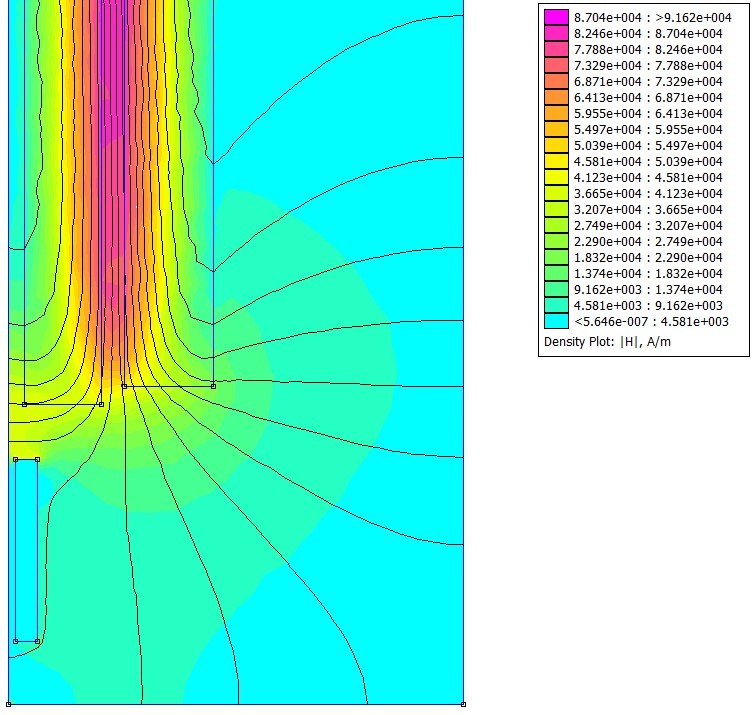
To overcome this situation, the simplest solution is to increase the distance between the current-carrying elements and the metallic materials. If this solution is not sufficient, which is quite possible, the next strategy (in order of difficulty of implementation) involves altering the geometry and material used in these elements exposed to the stray magnetic field, such as using non-magnetic metallic materials. A more severe and highly effective strategy is the use of electromagnetic shielding (high electrical conductivity material to repel the incident magnetic field) and/or magnetic shunt shielding (high relative magnetic permeability material to redirect the incident magnetic field). Both the characterization of this problem and its solution can (and should) be mapped through studies conducted with computational numerical simulations.